5 Ways Fear of Failure Stops Us In Our Tracks (And How to Push Past It)

5 Ways Fear of Failure Stops Us In Our Tracks (And How to Push Past It)

mindset growth resilience
Author: Vlad Ungureanu
Last update on: 04/09/2025
  • It might seem familiar to have that energizing feeling when starting a new project or endeavor, only to get stuck at the first hurdle, feeling unsure of what to do next and afraid of looking foolish. As it turns out, fear of failure affects about 40% of millennials today, more than the fear of spiders or ghosts, according to the Linkagoal Fear Index (2015), although this is based on survey data and should be interpreted cautiously. Whether it is avoiding a job interview or sticking to our safe “bag of tricks,” this fear can hold us back from growth. Many times it is also fueled by social media’s “highlight effect,” which makes everyone else’s success appear effortless and immediate. Research suggests that fear of failure contributes significantly to academic procrastination, with one study linking it to 62% of delayed academic performance (Özer et al., 2024). Yet as Wayne Gretzky said, “You miss 100% of the shots you don’t take.” This post explores five ways fear of failure holds us back and offers evidence-based strategies to overcome it. Let’s begin.
  • The Procrastination Trap

  • Fear of failure turns dreams into delays. A 2024 study reported that 62% of academic dissatisfaction was linked to fear-driven procrastination, where students avoid tasks to dodge the stress of failing (Özer et al., 2024). I have experienced this myself. I once skipped preparing for a presentation because I was afraid it would turn out badly, which ironically made the result worse. Over time, we tend to cling to our “bag of tricks” (the tasks we already know how to do) to protect our self-image and avoid risks that might require us to grow. This form of preemptive quitting, motivated by the fear of appearing incompetent, traps us in a cycle of inaction. It is easy to forget that the world we live in was built through constant iteration, not instant success. BMW’s current models were not built in 1916. They were shaped through decades of feedback and refinement.
  • Academic Anxiety

  • Students are especially vulnerable to this mental trap, particularly in high-stakes environments. A 2022 study of medical students found that 17% failed a subject, which increased their fear of failure. Women tended to fear shame, while men were more concerned with social disinterest from others (Alotaibi et al., 2022). This type of anxiety can cause avoidance behaviors, such as skipping study sessions or not asking for help, in order to protect a fragile self-image. I have seen friends freeze before exams, afraid that their effort would not be good enough, which only led to poorer performance. Social media worsens this dynamic. A study found that 65% of young adults feel inadequate when comparing themselves to curated success stories online (Vogel et al., 2014). It is important to remember that nobody starts in the spotlight. Brad Pitt, for example, worked as a limo driver and even wore a chicken costume before becoming a star. These stories remind us that failure is part of the journey.
  • STEM’s High Stakes

  • In science, technology, engineering, and mathematics (STEM), where trial and error is part of the process, fear of failure can suppress creativity and participation. A 2021 study found that fear predicted 45% of procrastination behaviors among STEM undergraduates (Henry et al., 2021). Students often avoid active learning situations like lab work or class discussions because they are afraid of making mistakes. This can lead to self-handicapping, such as underpreparing to have an excuse for failure, or even dropping out of STEM programs entirely. Many of us have hesitated to share an idea in class or at work out of fear it might sound silly, and in doing so, we miss valuable learning opportunities. Harder challenges discourage many, but our willingness to try can become a real advantage. A helpful mindset could be: “Failure only exists if I stop trying.” Every great invention, from BMW’s cars to SpaceX rockets, was developed through failed attempts that led to better solutions.
  • Entrepreneurial Paralysis

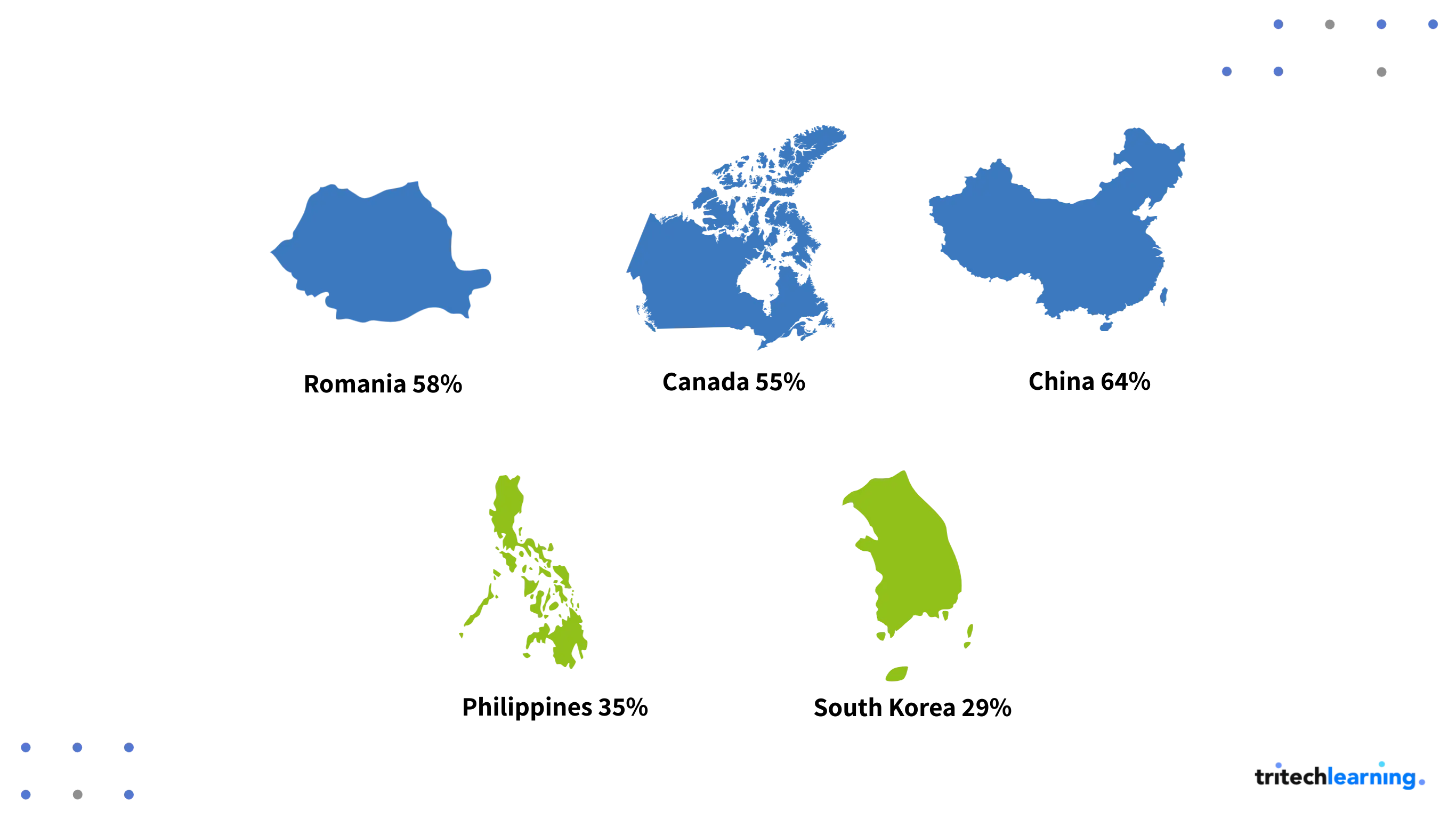
  • Fear of failure by country - GEM Report
  • A 2024 study found that 52% of UK entrepreneurs and 42.6% of US entrepreneurs experience fear of failure, particularly concerning financial ruin or social judgment (Dey et al., 2024). This fear often leads to self-sabotaging behaviors, such as delaying a product launch to perfect it or abandoning ventures altogether. Social media can distort our expectations. Highlight reels filled with glamorous entrepreneurs rarely show the struggle behind success. For example, Oprah was once fired from her job as a news anchor before becoming a media icon. The courage to take action when others hesitate can be your edge. Failure provides feedback that informs your next attempt. Throughout our lives, we will face a limited number of meaningful opportunities. Often, these moments do not feel obvious, and that is where an extra bit of courage becomes critical. The statistics around startup failure are indeed daunting, but fear does not work in our favor if it prevents us from starting at all.
  • Workplace Woes

  • Fear of failure also affects careers. One study found that 50% of employees believe fear of failure reduces their performance, impacting 40% of workers between 20 to 40 percent of the time (van Dam et al., 2019). Workers may avoid new projects, turn down promotions, or steer clear of challenges because they fear their mistakes will be exposed. We may instinctively turn down leadership roles out of fear, only to regret those missed chances later. Mental blocks like writer’s block can feel permanent, but taking a break and coming back often restores clarity. It is helpful to remind ourselves of our own capabilities. Telling ourselves, “I succeeded before, I can do it again,” reinforces confidence. Fear encourages us to shrink our efforts, but acting in spite of it helps us grow.
  • How to Push Past Fear of Failure

  • Fear of failure will always try to slow us down. That is why it helps to have strategies in place to understand it and act effectively. Here are some that are backed by research and practical experience: Re-frame Failure as Iteration Adopting the mindset “Failure only happens if I stop before finishing” can transform how we approach challenges. In reality, most progress is the product of iteration, not perfection on the first attempt. STEM fields illustrate this truth clearly, as entire disciplines are built upon trial and error, refinement, and repeated testing. BMW’s 2025 models, for example, are not the result of a single breakthrough moment but of countless prototypes and adjustments that gradually pushed the design forward. The same applies to our personal projects. Often, putting the first draft on paper or taking the first imperfect step solves half of the problem because it creates something tangible we can improve. Each small adjustment moves us closer to mastery, and each so-called “failure” is simply feedback guiding us toward a better solution. Celebrate Past Wins Confidence grows when we remind ourselves that progress has already happened before. Reflecting on past wins is not about inflating ego but about reinforcing the fact that you are capable of overcoming obstacles. Research shows that recalling accomplishments strengthens self-belief and resilience. A practical way to apply this is to keep a running list of achievements, whether big or small. It might include memories such as, “I delivered that presentation well,” or “I completed a project I once thought was too complex.” When self-doubt surfaces, reviewing this list can ground you in evidence of your own abilities and remind you that setbacks do not erase your capacity to succeed. Limit Social Media Modern life makes comparison almost unavoidable, but social media intensifies it to an unhealthy degree. Scrolling through curated images and highlight reels can distort our perception of success and make us feel as if we are constantly behind. In fact, most young adults report feeling worse after scrolling, which shows how strong the emotional toll can be. The solution is not to abandon digital spaces entirely but to curate them intentionally. Choose to follow people who share honest stories, struggles as well as triumphs, or explore biographies that highlight both the difficulty and the breakthrough in someone’s journey. These reminders restore balance by showing that real growth always involves setbacks, delays, and persistence. Take Breaks for Perspective Fear and frustration often cloud judgment when we are stuck, making it seem as if progress has stalled completely. The mind, however, benefits from distance. Stepping away briefly is not avoidance; it is a way to reset perspective and reduce the paralysis that fear can create. Even short activities like a walk, a change of scenery, or shifting focus to another task allow the brain to process in the background. Returning later, you may find that solutions come more easily and that the challenge no longer feels as overwhelming. Breaks are not lost time, they are strategic pauses that help restore clarity and energy. Build Support Networks Courage is easier to sustain when shared. Supportive peers, mentors, or communities can act as a buffer against fear and self-doubt. Evidence from demanding fields, such as medical education, shows that emotional support plays a powerful role in helping individuals manage fear and maintain motivation. For personal growth, this principle holds just as true. Talking openly about fear with a trusted friend, colleague, or mentor reduces its weight and normalizes the struggle. Beyond easing the mental burden, support networks provide encouragement, accountability, and fresh perspectives. Growth may be a personal journey, but it becomes far more sustainable when we allow others to walk beside us.
  • Fear Cannot Hold Us Down

  • Fear of failure can block progress in many areas. It contributes to academic procrastination, discourages entrepreneurship, and reduces workplace performance. It keeps us relying on safe habits, amplifies avoidance through social media, and makes difficult challenges feel impossible. By reframing failure, celebrating wins, managing digital input, taking strategic breaks, and surrounding ourselves with support, we gain the tools to move forward. Start today by writing down one past win. Share it in the comments as your first step. As Wayne Gretzky said, “You miss 100% of the shots you don’t take.” Fear may whisper doubt, but courage will take the lead.

Growth begins with curiosity! At Tri Tech Learning, you’ll find free courses, webinars, presentations and articles that help you understand yourself and grow with purpose. To advance even further, explore our premium courses, workshops, and 1-on-1 coaching sessions, each designed to turn insight into meaningful, lasting change.

Efficient Learning CourseSelf‑paced

Efficient Learning: Master the Science of Learning

10–12 hrs All levels

Efficient Learning: Master the Science of Learning is a course designed to explain how memory works, show how to use cognitive psychology to improve focus, and build habits that make learning practical, effective, and lasting.

Knowing Yourself CourseSelf‑paced

Knowing Yourself: The Key to A Fulfilled Life

25-30 hrs Beginner

Knowing Yourself: The Key to A Fulfilled Life is a psychology-based course that helps you build self-esteem, strengthen self-worth, and gain clarity about your identity, emotions, and personal growth.

[Article] There are no Magical Solutions in Life
growthcritical thinkingpractical
04/09/2025
[Article] Motivation and Willpower: Unlocking Your Inner Drive
motivationmindsetpractical
04/09/2025
[Article] Why Our Attention Span Is Crumbling (And 5 Ways to Reclaim It)
mindsetmindfulnesspractical
04/09/2025
[Article] “I Do What I Speak”: Building Accountability and Commitment That Stick
mindsetmotivationpractical
04/09/2025
[Article] 5 Ways Fear of Failure Stops Us In Our Tracks (And How to Push Past It)
mindsetgrowthresilience
04/09/2025