
Breaking Free from Perfectionism
What is Perfectionism?
- Do you ever catch yourself tweaking a two-sentence email, convinced it wasn’t "just right"? Or have you avoided starting a new project because you feared it wouldn’t be flawless? You’re not alone. Welcome to the club! Perfectionism, often mistaken for undeniable proof of professionalism and ambition, is a silent progress-killer. A meta-analysis of 95 studies found that perfectionists achieve less at work than non-perfectionists, weighed down by unrealistic standards and the constant pressure of self-criticism (Breidenthal & Steed, 2018). From a significant increase in depression rates to a much higher risk of burnout, perfectionism affects our productivity, mental health, and personal growth. In a world shaped by social media and relentless competition, it’s no surprise that perfectionism among students rose from 9% to 18% over just three decades (Curran & Hill, 2017). This post uncovers five ways perfectionism derails our lives and shares several strategies to break free. Let’s stop chasing perfection and start moving forward.
Perfectionism Paralyzes Productivity
- Perfectionism promises excellence but often delivers procrastination. A 2018 Harvard Business Review analysis of 95 studies revealed that perfectionists get less done at work, slowed by inflexible standards and an all-or-nothing mindset (Breidenthal & Steed, 2018). They fixate on irrelevant details, such as polishing a PowerPoint slide for hours, and end up missing deadlines and opportunities. Most of us have experienced this, rewriting something endlessly only to realize the first version was good enough. This mental paralysis stems from fear of failure, with 60% of perfectionists delaying tasks, just to make sure they avoid any mistakes (The School of Life, 2017). The result is stalled projects, frustrated colleagues, and diminished creativity, as we avoid risk-taking and hesitate to seek feedback, preferring to keep tweaking rather than finishing.
The Mental Health Trap
- Perfectionism doesn’t just slow your work. It affects your emotional well-being. A 2017 meta-analysis found that perfectionism doubled among students (9% to 18%) and was associated with significantly higher rates of depression and anxiety, as the fear of not being "perfect" fuels self-criticism (Curran & Hill, 2017). Social media amplifies this effect. Curated lives set impossible benchmarks, making people feel inadequate. This inner voice ("I’m a failure if I’m not flawless") traps us in a cycle of despair. It becomes difficult to pursue goals or celebrate wins. One study highlighted a student who earned an A+ but felt suicidal because it “took too much effort” (Hewitt & Flett, 2019). Perfectionism poisons progress. We must ask ourselves: Is it worth the price?
Avoidance Steals Your Momentum
- Perfectionists often dodge tough tasks, fearing they won’t measure up. A 2014 study found that 68% of young adults use digital media (like scrolling social media or binge-watching videos) as escapism to avoid mentally demanding work (Kardefelt-Winther, 2014). It might sound familiar. Instead of tackling an important project, we reorganize our desks or clean the house. These small tasks feel productive but are often driven by the fear of an imperfect result. This avoidance, rooted in perfectionism’s high expectations, wastes hours and reinforces feelings of inadequacy. We get stuck in distraction instead of moving forward.
Fear of Help Stops Growth
- Perfectionism makes us view asking for help as a sign of failure. Research shows that perfectionists are 50% less likely to seek psychotherapy and 30% more likely to drop out, fearing judgment for not being “perfect” in therapy (Hewitt & Flett, 2019). This resistance stalls growth in mental health, relationships, and careers. Many of us have hesitated to ask colleagues for feedback, worried they’d see our work as flawed. Avoiding support leads to missed opportunities for learning, healing, and development. Perfectionism isolates us and blocks our progress.
The Superhero Syndrome Isolates You
- Perfectionism fuels a “superhero syndrome,” where we believe we must do everything alone and flawlessly. No successful person (athlete, CEO, or artist) builds success in isolation. Behind every achievement is a team. Athletes rely on coaches, nutritionists, and mental health experts to focus on their performance. Yet perfectionists often resist help, afraid it shows weakness. They are less likely to seek therapy and more likely to quit early (Hewitt & Flett, 2019). When we reject collaboration, we overload ourselves and lose the benefit of shared insight and support. Progress slows, and burnout becomes inevitable.
Burnout Buries Ambition
- The relentless pursuit of perfection often leads to burnout. A 2016 meta-analysis of 43 studies found that perfectionists face a 200% higher risk of burnout (emotional exhaustion and reduced accomplishment) than non-perfectionists, with no performance benefits (Hill & Curran, 2016). Athletes, students, and professionals often report feeling “never good enough,” even after success. Perfection-driven efforts can leave us drained, disengaged, and demotivated. This burnout not only halts career progress but also affects physical health, with perfectionists facing a 25% higher risk of high blood pressure (Flett & Hewitt, 2018). Chasing perfection doesn’t fuel success. It buries it.
Overcoming Perfectionism
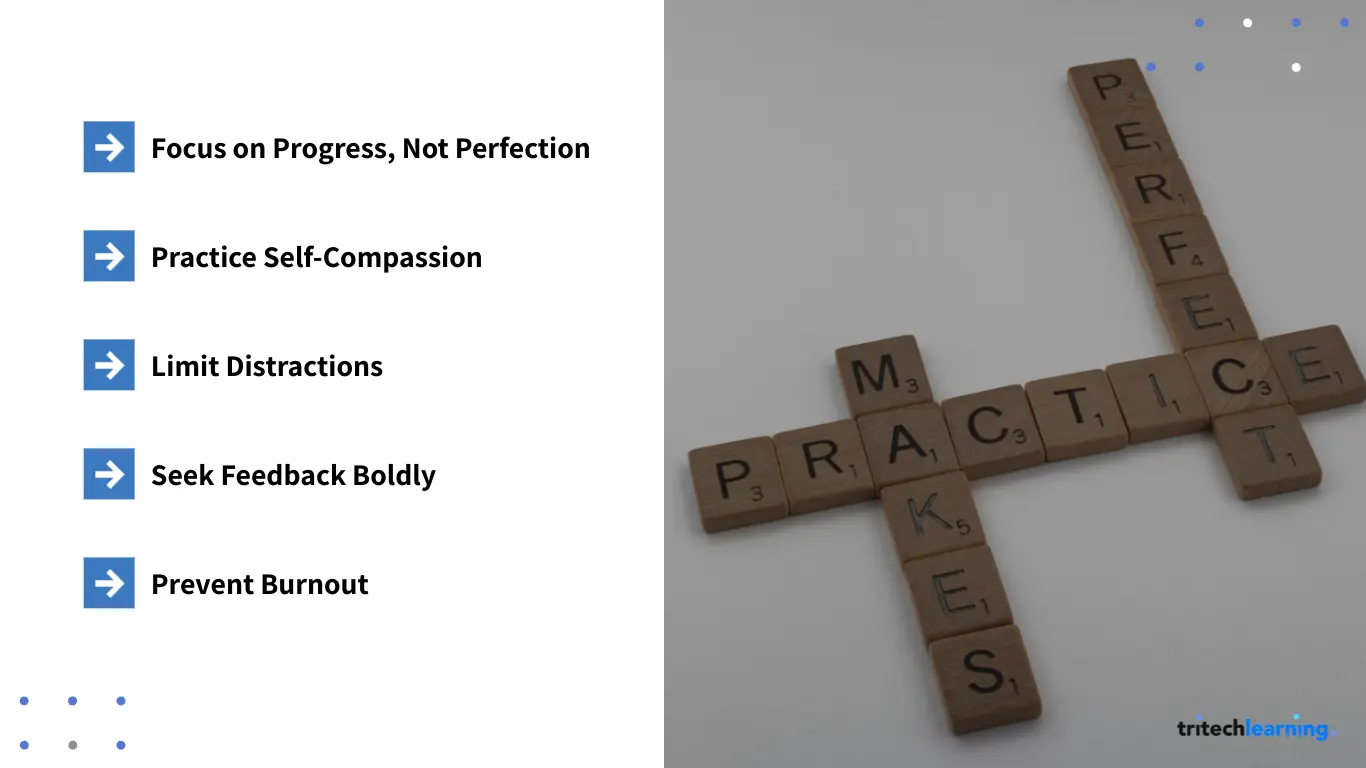 Overcoming Perfectionism Strategies
- Overcoming perfectionism is not about lowering your standards or giving up on excellence. It is about freeing yourself from the pressure of unrealistic expectations so that genuine progress can take place. When we focus on learning, growth, and self-compassion rather than flawless outcomes, we build habits that sustain long-term success. The following strategies can help you shift from striving for perfection to cultivating consistent, meaningful improvement. Focus on Progress, Not Perfection A healthier mindset begins by redefining what success looks like. Instead of chasing flawless results, learn to accept “good enough” as a legitimate milestone. Every great achievement (whether a book, a business, or a personal transformation) was built through multiple drafts, trials, and revisions. Progress compounds when you complete what you start, learn from it, and improve through deliberate iteration. Perfectionism, by contrast, traps you in endless refinement and self-criticism. Remind yourself that done is better than perfect, and progress is the true sign of mastery. Practice Self-Compassion Perfectionism thrives on harsh self-judgment, so one of the most effective ways to counter it is through deliberate self-kindness. Writing a gentle, understanding letter to yourself when you make a mistake can soften the impact of self-criticism and restore emotional balance. Research by Curran and Hill (2017) shows that self-compassion not only reduces anxiety and shame but also supports healthier motivation. Instead of viewing errors as evidence of inadequacy, see them as stepping stones toward growth. Every mistake offers feedback, and every setback strengthens the foundation for future success. Limit Distractions Perfectionism often hides behind avoidance. When we fear not performing well enough, we distract ourselves with screens, notifications, or unnecessary tasks. To counter this, create an environment that supports focus and mindful effort. Use app blockers, set clear boundaries for work and rest, and schedule distraction-free periods dedicated to meaningful work. Studies suggest that 68 percent of young adults engage in digital avoidance when tasks feel overwhelming (Kardefelt-Winther, 2014). Reducing distractions helps you confront discomfort directly, build tolerance for imperfection, and maintain steady progress toward your goals. Seek Feedback Boldly Feedback can feel threatening to the perfectionist mindset because it exposes our vulnerabilities. Yet, it is one of the most powerful tools for development. Reframing feedback as a resource rather than a verdict transforms it into a source of growth. When you share your work or progress with someone you trust, you not only receive valuable insights but also practice humility and courage. Constructive feedback accelerates improvement far more than isolated effort, and it reinforces the idea that learning is a collaborative process, not a solitary performance. Prevent Burnout Perfectionism is exhausting because it demands constant control and flawless output. To protect your well-being, integrate daily practices that promote rest and self-awareness. Mindfulness meditation, even for just ten minutes a day, helps you recognize self-critical thoughts before they spiral into self-doubt. Pair this with realistic goal-setting and regular breaks to maintain a sustainable rhythm of effort and recovery. As Hill and Curran (2016) emphasize, self-care and mindful pacing are essential for long-term performance. Remember, progress is not about constant intensity; it is about consistent, balanced energy directed toward what truly matters.
Freedom from Perfectionism
- Perfectionism is a progress-killer. It paralyzes productivity, disrupts mental health, encourages avoidance, blocks help, and leads to burnout. With a 200% increased risk of burnout and a 50% lower chance of seeking support, the costs are steep. Yet freedom is possible. By shifting to a mindset of progress, showing compassion to ourselves, managing distractions, welcoming help, and avoiding burnout, we can move forward without the pressure to be flawless.
- Our course “Knowing Yourself: The Key to a Fulfilled Life” offers a practical and scientifically grounded exploration of identity, perfectionism, and personal growth. It teaches you how to understand yourself more clearly and how to move forward with greater confidence and resilience.
Growth begins with curiosity! At Tri Tech Learning, you’ll find free courses, webinars, presentations and articles that help you understand yourself and grow with purpose. To advance even further, explore our premium courses, workshops, and 1-on-1 coaching sessions, each designed to turn insight into meaningful, lasting change.
 Self‑paced
Efficient Learning: Master the Science of Learning
Efficient Learning: Master the Science of Learning is a course designed to explain how memory works, show how to use cognitive psychology to improve focus, and build habits that make learning practical, effective, and lasting.
€0€99
 Self‑paced
Knowing Yourself: The Key to A Fulfilled Life
Knowing Yourself: The Key to A Fulfilled Life is a psychology-based course that helps you build self-esteem, strengthen self-worth, and gain clarity about your identity, emotions, and personal growth.
€399
 Self‑paced
Emotional Intelligence: For Growth in Love, Work, and Life
Emotional Intelligence: For Growth in Love, Work, and Life will help you understand emotions, build empathy, and strengthen relationships with practical, research-based emotional intelligence skills.
€499